


Furniture that fits beautifully doesn't happen by accident. So, how do you find the right fit? We’ve compiled this guide that walks you through everything from measuring your space to dialing in the perfect seat depth for your lounging style, so your next piece feels made for you.
Why Size Matters More Than Style
The ideal size of your sofa or sectional depends on the size of your room: a sofa that gets in the way will end up being a regrettable purchase, no matter how beautiful it is. Being able to move freely around your sofa will impact how your entire space feels. Getting the size right isn't a footnote to the buying process, it is the buying process. The good news is, a few measurements made before you shop will save you from the most common, and costly, furniture mistakes.
Where to Start: Measuring Your Space
Before you fall in love with any piece, grab a tape measure. Sketch out your room and record these numbers:
Overall room dimensions: length × width
Door and entryway widths: essential for delivery
Window placement and sill heights: these can determine clearance for larger furniture items
Ceiling height: lower ceilings benefit from lower-profile furniture
Any fixed elements: think fireplace, built-ins, radiators, outlets
With these in hand, you're ready to figure out what can actually fit, and what will feel proportional once it's in the space. Here’s a pro tip: cut a piece of cardboard or butcher paper to the exact footprint of the sofa or sectional you're considering, and lay it on the floor. This trick gives you an honest preview of how the piece will occupy the room.

Size It Up: Finding the Perfect Sofa or Sectional
A beautiful room that's hard to move around in will frustrate you every single day. Traffic flow is the invisible architecture of a well-designed room, so make sure you think ahead about how you plan to move about the space.
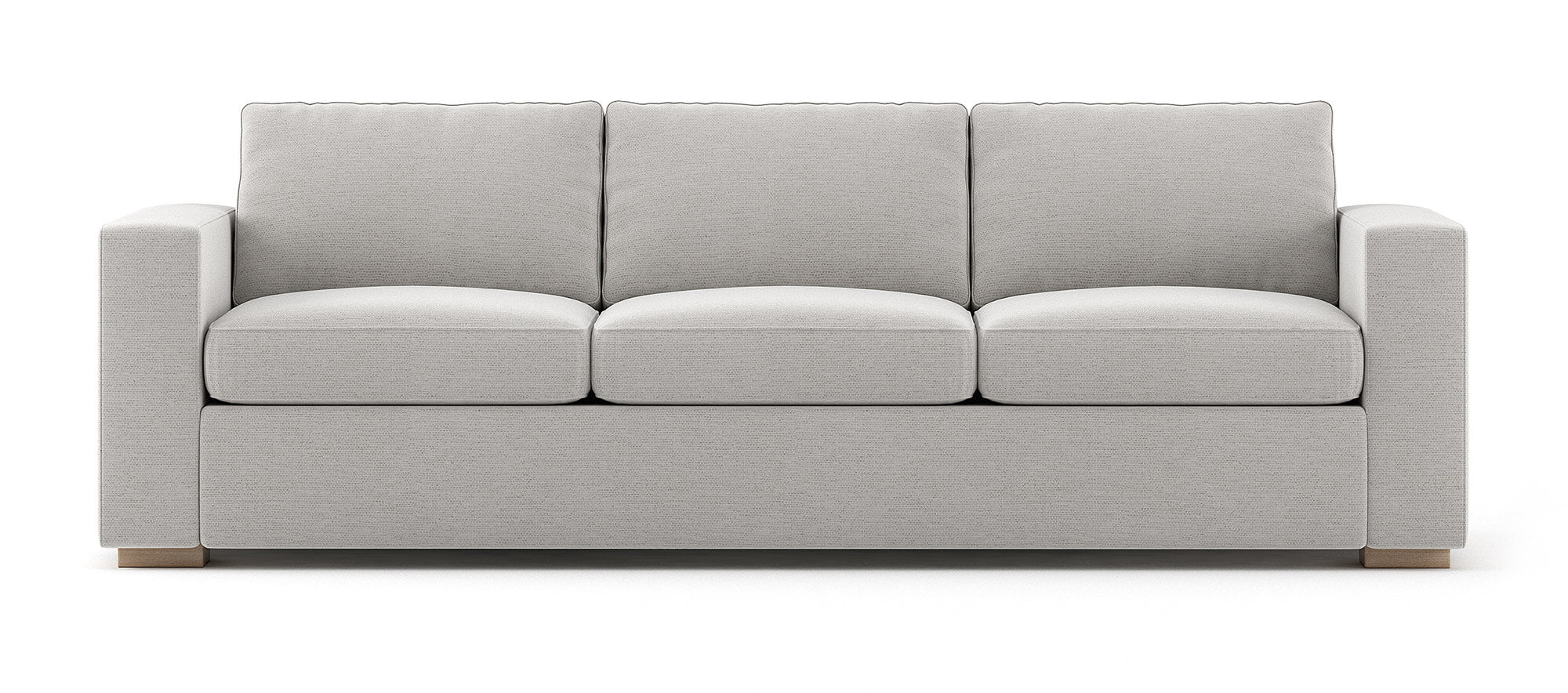
Sofas are often the anchor piece in a living room, so getting its proportions right has a cascading effect on everything else.
Supporting Measurements to Consider
Besides considering a sofa vs. a sectional, there’s some extra measurements to think about when creating a functional living space.
Main walkways should have at least 36" of clearance, which is generally enough for two people to pass comfortably. Secondary paths, like those around a coffee table, or to a window, can be 24–30".
Sofa-to-coffee-table distance: 18" is the workable minimum, but 20–24" is ideal for easy leg room without having to stretch too far to reach your drink, phone, or book.
Other furniture should be between about 30"-36” away for ample walking space, and at minimum 24” if you’re working with a smaller space.
Sectionals in open floor plans can also double as room dividers. Just ensure the sofa's chaise isn't blocking the natural path between zones.
Don't forget delivery! Measure your front door, hallway, stairwell, and any tight corners before ordering. A sofa that won't fit through the door is one of the most avoidable furniture problems.

Sofa vs. Sectional: Which is right for your space?
The decision between a sofa and a sectional will come down to how you use the room, the occupants in the home, and whether the layout can handle the extra footprint.
Choose a Sofa When…
- You prefer flexibility to rearrange
- Your room is on the smaller side
- You need clear pathways on multiple sides
If you love a sectional, but your space can only accommodate a sofa, remember that a sofa + ottoman or sofa + accent chair combo can be just as comfortable!
Choose a Sectional When…
- Family movie nights are a regular ritual
- You want your space for lounging or a more casual vibe
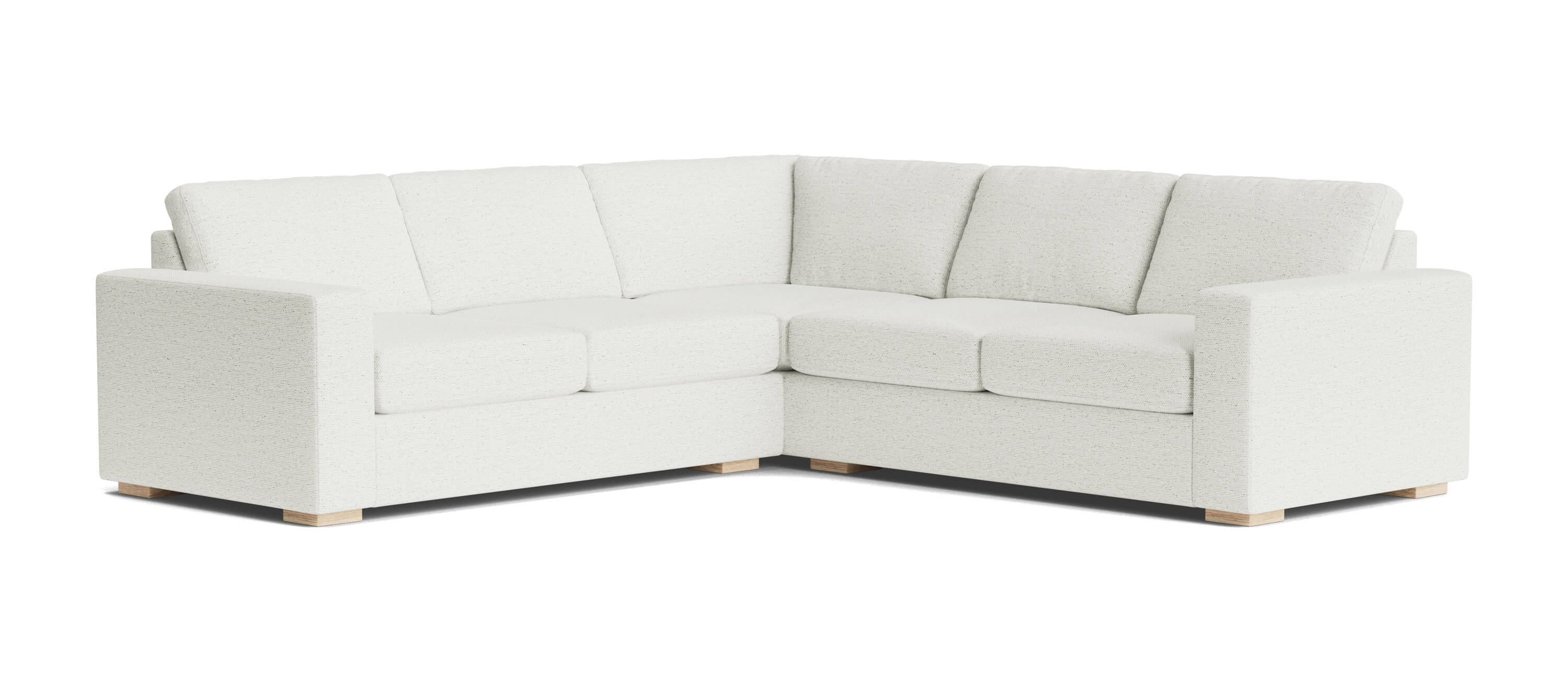
When going for a sectional, the chaise should extend no deeper than feels natural for the room's flow. Measure the full L-shape footprint before committing, and verify that the configuration (left-facing vs. right-facing) matches your room's layout.

Getting Comfortable: All About Seat Depth, Seat Height & Back Height
Once you've nailed the overall length, it's time to get personal: before you shop, think about how you actually use your sofa. Do you tend to sit upright with your feet on the floor, stretch out for a full lounge, or somewhere in between? Also, consider the role your sofa needs to play: is this for a more formal sitting room, or will it be your go-to spot for movie nights and lazy Sundays?
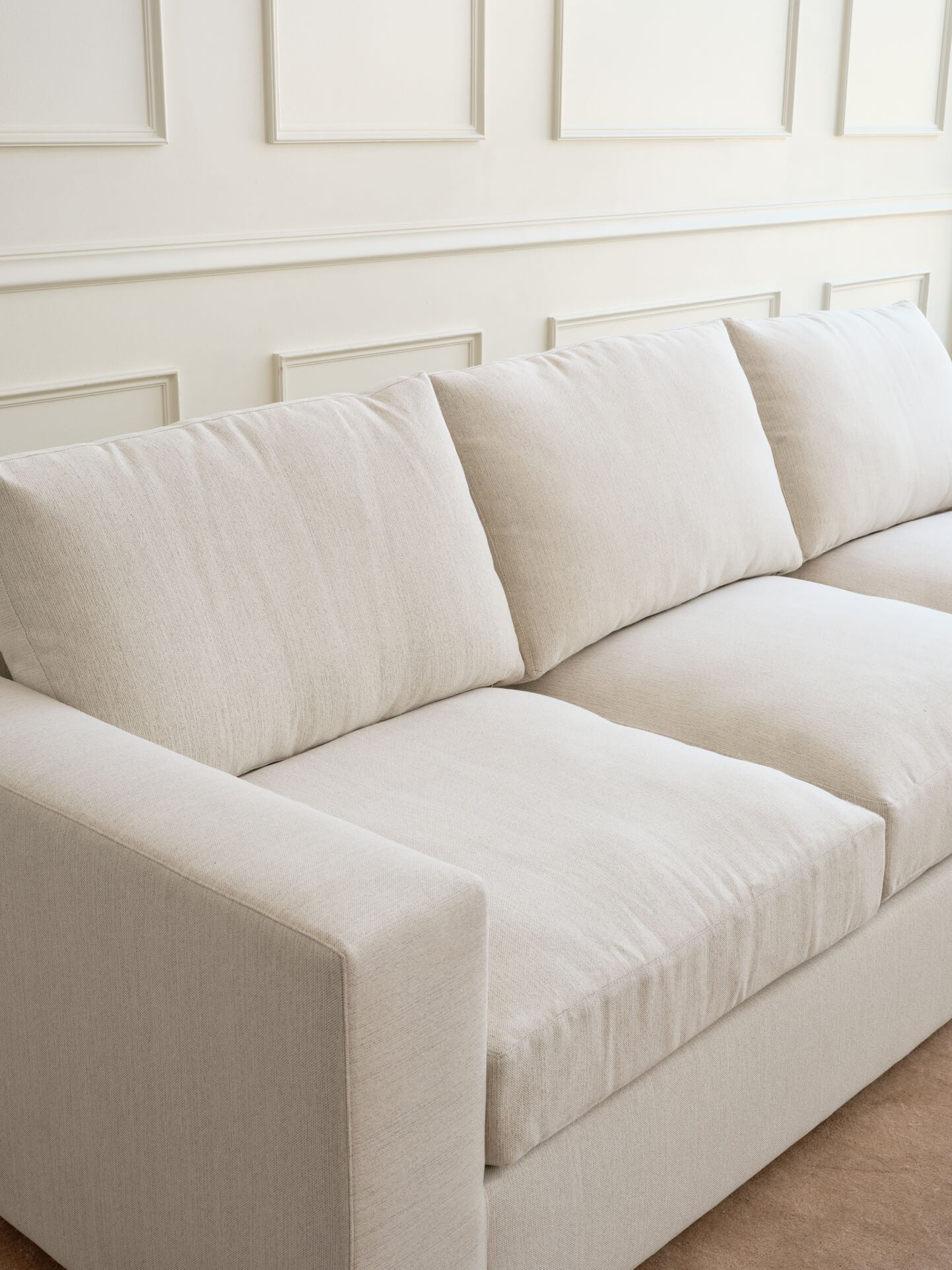
Seat Depth: we always like to start with this very important measurement. Seat depth is measured from the front edge of the seat cushion to the back cushion. This dimension is most tied to how you naturally like to use your sofa. For example, if you like to tuck in and curl up, you'll benefit from some extra depth. If you sit up with your feet on the floor and enjoy a little more back support, a shorter depth will be right for you.
Upright sitters: 19"-20” seat depth will feel supportive and keep your knees at a natural 90-degree angle.
Loungers and curlers: A seat depth over 24” will give you the room you need to get truly comfortable.
In-betweeners: 21”-23” is a versatile seat depth that will accommodate most sitting and light lounging positions.
Your height also plays into this very important choice! For people between 5'4 and 5'10, the above measurements should work for you. If you’re any taller, it’s safe to add a few inches to the standard measurements listed above. For all the ‘less tall peeps’, you’ve got some more flexibility with these measurements, and it’s more about finding the perfect accent pillow to bolster your back if you want to sit upright.
Seat Height: Seat height runs from the floor to the crown (very top) of the seat cushion. The standard range for seat height falls between 17" and 19". A general rule of thumb is that the deeper the seat depth, the lower the seat height needs to be, and vice versa.
Too low of a seat height, and taller people feel like they're squatting; too high and shorter people find their feet dangling.
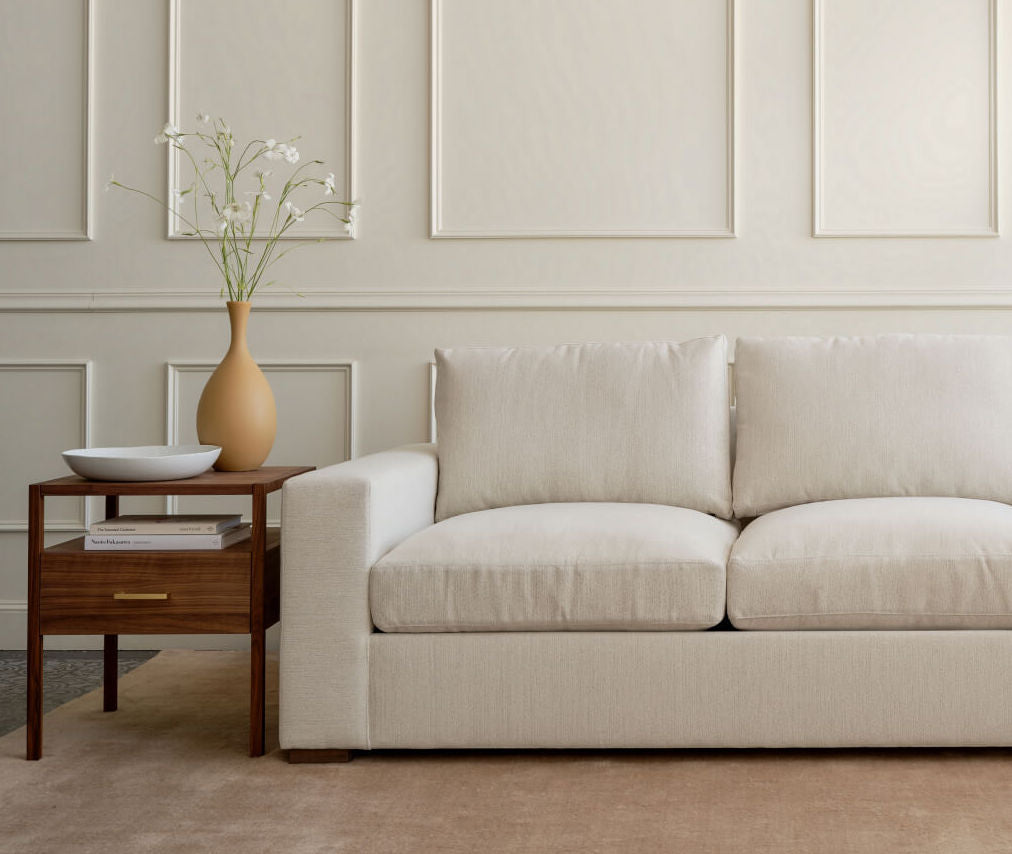
Hot tip: You’ll also generally want to match seat height to coffee tables, accent tables, and other seating in the room: within 1"-2" keeps the space visually cohesive.

Back Pillow Height: Back pillow height is measured from the seat cushion to the top of the back pillow, and ranges typically from 16" to 20". Your typical sofa usage shapes this choice!
For conversational or upright use, a taller back (19"+) provides neck and upper-back support. For lounging and low-profile aesthetics, a shorter back (16”-18") suits deeper-seat sofas and creates a more relaxed silhouette.
Arm Height and Width: don't overlook the arms, especially if napping or WFC (work-from-couch) is part of your sofa’s life plan. An arm height of 7"–9" above the seat cushion is a sweet spot for most people: low enough to rest your head comfortably, but high enough to feel supported. Very low arms (under 6") are usually reserved for more contemporary, lounge-forward designs; taller arms (10"+) offer a more formal, classic silhouette.
Also, consider arm width! A thin sofa arm creates an elegant look, but if resting a book, a cup of tea, or a laptop on a sofa arm is your kind of thing, go for a sofa with a wide arm.

The Bottom Line
We've spent over two decades helping people find furniture that *fits* – not just the right dimensions, but within their daily life. There’s a lot of considerations before adding to cart and checking out. This guide covers the fundamentals, but your space, your body, and how you actually live are unique. Take note of this quick little guide for keeping your dimensions straight, and keep reading for even more resources.
At A Glance: Quick Guide to Measuring
| Main walkways | at least 36" |
| Secondary walkways | at least 24 – 30" |
| Sofa to coffee table distance | 20-24" (18" is the workable minimum) |
| Coffee table height | +/- 2" from seat height of sofa |
| Side table height | No shorter than sofa arm height |
| Alternate seating | +/- 2" from seat height of sofa |
We've also got additional resources to take you the rest of the way:
If you're looking for more buying advice, check out our Comfort Guide offering condensed product information or schedule a chat with one of our design specialists.
If you feel like you’ve got this part down, the next step is to head to our swatches page and order free fabric samples. We offer 100+ fabrics and leathers from cozy velvets to breezy linens, and all certified to make your vision of comfort all the more real.









Leave a comment
All comments are moderated before being published.
This site is protected by hCaptcha and the hCaptcha Privacy Policy and Terms of Service apply.